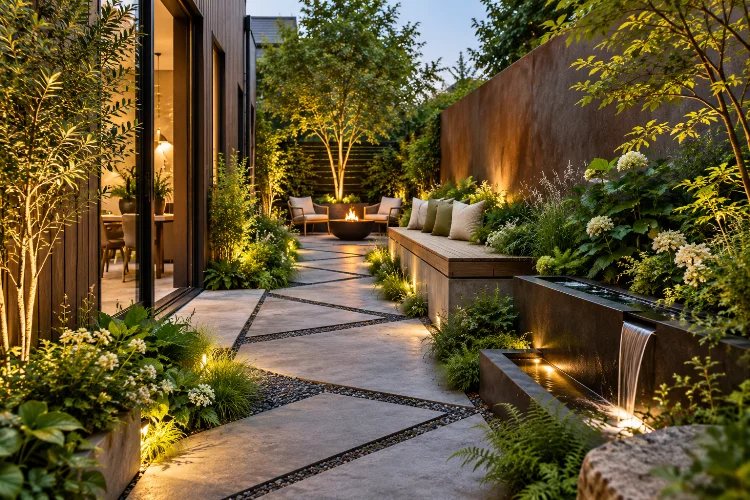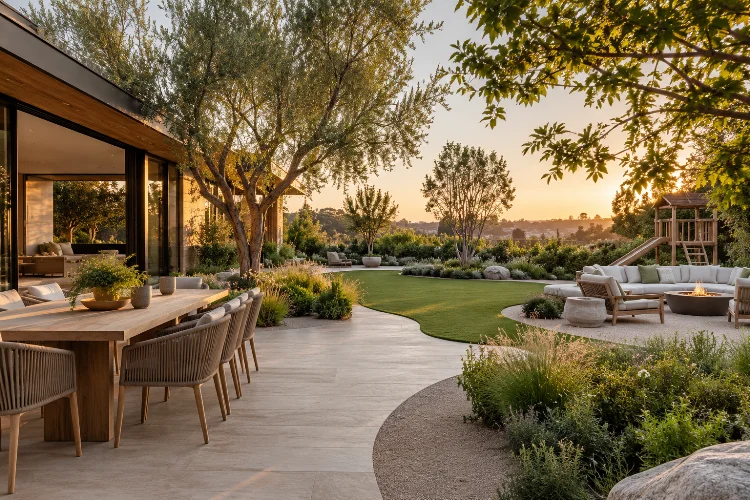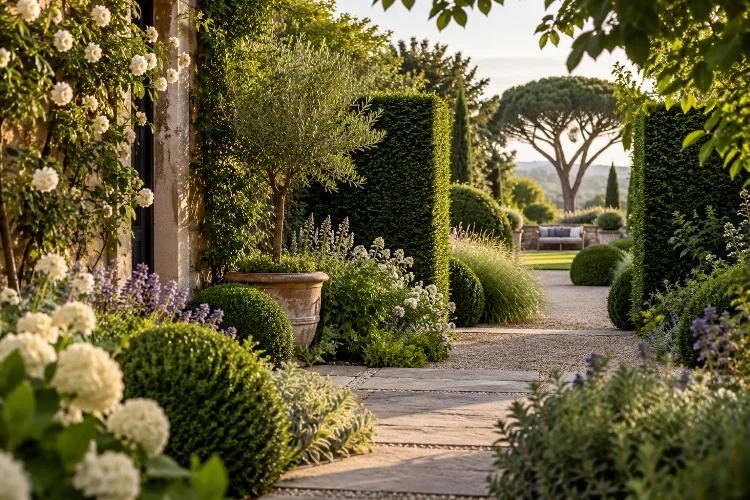
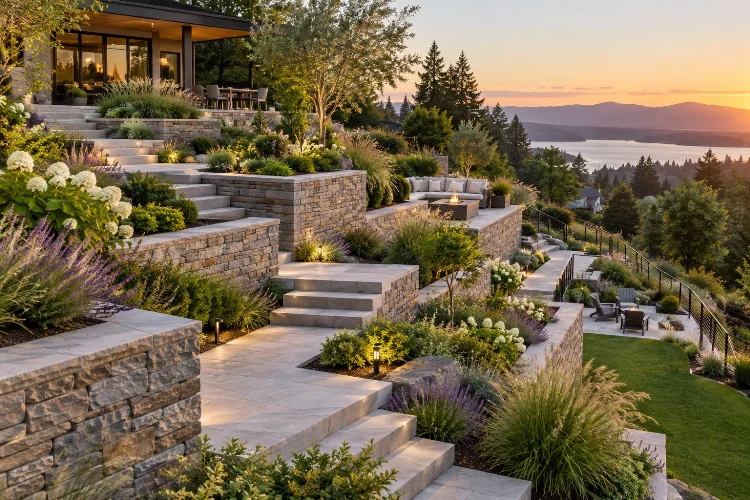
A sloping garden can initially feel like a design problem. Furniture refuses to sit level, lawns become awkward to maintain, water rushes downhill during heavy rain, and every journey across the property starts feeling like a workout.
But slopes also offer something completely flat gardens cannot: natural changes in height.
Using level changes to improve sloped residential landscapes means working with that elevation rather than automatically trying to flatten the entire site.
Terraces, retaining structures, stepped paths, planted banks, and carefully positioned platforms can transform difficult ground into a sequence of practical outdoor spaces.
Slopes do require additional planning. Iowa State University Extension notes that steeper ground is generally more vulnerable to erosion, harder to irrigate, and more difficult to maintain safely.
The goal is not to create as many levels as possible. Good landscape design identifies where flatter surfaces are actually useful, where the existing slope should remain, and how people, plants, and water can move comfortably between them.
Understand the Slope Before Redesigning It
Before drawing terraces, measure what you already have.
Look at the total elevation change from the highest to lowest point, but also pay attention to local variations. A property might have one relatively gentle area followed by a short, much steeper bank.
Drainage is equally important.
Watch what happens during heavy rain. Where does water enter the property? Does it collect at the bottom, cut small channels through soil, or flow from a driveway or neighboring area onto the slope?
Iowa State University Extension explains that moderately steep slopes can already become difficult to walk, garden, and irrigate because water tends to move downhill before soaking into the soil.
Also record sunlight, existing vegetation, soil type, important views, doors, and potential seating areas.
Good grading decisions respond to the whole site rather than treating elevation as an isolated problem.
Create Terraces Where Flat Space Adds Real Value
Terracing is one of the most effective ways to turn a slope into usable garden space.
Instead of one continuous incline, retaining walls or planted banks create a series of flatter levels. These can support dining areas, lawns, vegetable gardens, seating zones, or planting beds.
Terracing can also slow surface runoff compared with allowing water to travel continuously down exposed ground. Iowa State University Extension specifically recommends terracing with retaining materials as one strategy for reducing erosion and creating usable planting areas.
However, avoid turning the entire property into a giant staircase.
Reserve the largest level areas for activities that genuinely require relatively flat ground. An outdoor dining terrace needs stability, while a naturalistic planting area may work perfectly well on the original slope.
This approach usually feels more relaxed and can reduce the amount of expensive earthwork required.
Treat Retaining Walls as Architecture
Retaining walls are functional structures, but they are also major visual elements.
A large blank wall can dominate a garden. Breaking one dramatic level change into two or three smaller terraces may create a softer landscape while providing additional planting opportunities.
Materials should relate to the architecture of the house.
Natural stone can feel appropriate in informal landscapes, while concrete, brick, timber, or masonry may work better with contemporary buildings.
The RHS notes that steep sites may require retaining walls and recommends professional construction for significant projects.
That advice matters because retaining structures are not simply decorative walls. They hold soil and may need engineered foundations, drainage, reinforcement, and compliance with local building requirements.
Water pressure behind poorly drained retaining walls can create serious problems.
For substantial structures, involve an appropriately qualified landscape professional, structural engineer, or contractor rather than guessing at the construction details.
Make Steps and Paths Part of the Experience
Moving between levels deserves as much attention as creating the levels themselves.
A steep staircase may provide the shortest possible route, but it can also make the garden tiring and inaccessible. Where space allows, longer paths with gentler transitions can offer a more comfortable alternative.
Combine direct and scenic routes where useful.
The main circluation path between the house and dining terrace should probably be convenient, especially when someone is carrying food. A secondary path through planting can take a slower route between levels.
Landings are valuable too.
A wider landing halfway up a slope can become more than a pause between steps. Add a bench, specimen plant, or view across the garden and it becomes a small destination.
Lighting should also follow level changes. Steps and retaining edges that are obvious during the day can become surprisingly difficult to read at night.
The transition between levels should feel intentional rather than like leftover engineering.
Use Drainage to Shape the Landscape
Water always responds to gravity, so grading and drainage need to be planned together.
Simply creating flat terraces without understanding where water will go can move a drainage problem rather than solve it.
Swales can sometimes help manage runoff. The RHS describes them as shallow channels that collect and slowly move surface water, helping reduce runoff and erosion while encouraging infiltration.
Rain gardens may also work in appropriate locations. The RHS recommends them for relatively gentle ground and emphasizes assessing drainage, overflow routes, soil, utilities, and proximity to foundations before installation.
Think about water as another layer of the design.
Instead of allowing runoff to race directly from the top to the bottom of the garden, the landscape can slow it, redirect it safely, or allow more water to infiltrate where conditions are suitable.
Drainage should be designed before expensive paving and planting, not added after erosion appears.
Plant the Remaining Slopes Instead of Fighting Them
Not every incline needs a wall.
Sometimes the strongest design decision is leaving part of the existing slope intact and stabilizing it through planting.
Bare slopes are vulnerable to erosion. Plant foliage can reduce the impact of heavy rain, while root systems help hold the soil together. Layered planting with trees, shrubs, perennials, grasses, and groundcovers can provide stronger coverage than isolated plants.
Choose species according to conditions at different heights.
Upper slopes may drain quickly and become relatively dry, particularly in full sun. Lower areas may receive more water.
RHS guidance on sunny slopes recommends matching plants to sharp drainage, exposure, and local growing conditions rather than constantly compensating with extra inputs.
Planting across contours rather than creating straight downhill rows can also help slow surface water.
This often creates a more natural-looking transition between engineered terraces.
Use Height Changes to Strengthen Views and Privacy
Levels can dramatically change what people see.
An elevated terrace might overlook the entire garden, while a lower seating area can feel protected and private. Retaining walls and planting can strengthen that seperation without requiring tall fences everywhere.
Think about sightlines from every major level.
A person sitting on the upper dining terrace may look across the roof of a lower garden structure, while someone at ground level experiences that same structure as a strong visual boundary.
Level changes can also create excellent focal points.
A small tree planted on an intermediate terrace may appear against the sky from below. A water feature positioned beside a retaining wall can become visible from several parts of the property.
Use elevation deliberately to reveal some areas while partially concealing others.
That makes a sloping property feel deeper and more interesting instead of simply difficult.
Design Maintenance Access From the Beginning
A landscape can look excellent on installation day and still become frustrating within two years if routine maintanance is difficult.
Ask how someone will reach every planting area.
Can a wheelbarrow move between levels? Is there reasonable access for pruning or replacing plants? Will irrigation equipment need to cross multiple staircases?
Steep lawn should be questioned carefully. Mississippi State University Extension notes that steep turf areas can be difficult or unsafe to mow and may also suffer from significant erosion.
Replacing difficult turf with shrubs, grasses, groundcovers, or naturalistic planting can reduce repetitive work.
Also leave enough soil depth in terraces for intended plants and make sure irrigation can accomodate different conditions from the top to the bottom of the property.
The easiest sloped gardens to live with are designed around future maintenance, not just the initial photograph.
Using level changes to improve sloped residential landscapes can turn difficult terrain into one of a property’s strongest design features.
Terraces create usable outdoor rooms, retaining structures provide organization, planted slopes stabilize soil, and carefully designed paths connect different elevations.
Drainage, sightlines, accessibility, and long-term maintenance should influence every change in grade.
Start by understanding the natural slope instead of immediately trying to remove it. Identify where genuinely level ground is necessary, then allow planting and softer grading to handle the remaining terrain.
Before beginning major excavation or retaining-wall construction, develop a complete grading and drainage plan with appropriate professionals.
When height changes are treated as part of the design rather than an obstacle, a sloping garden can become more practical, dramatic, and enjoyable.