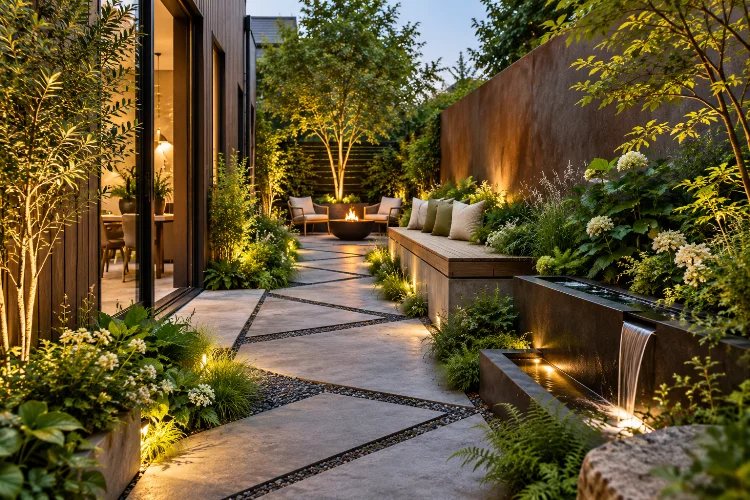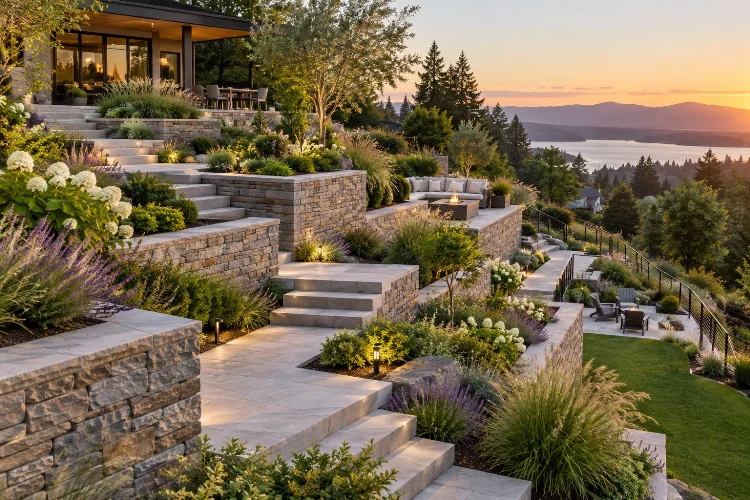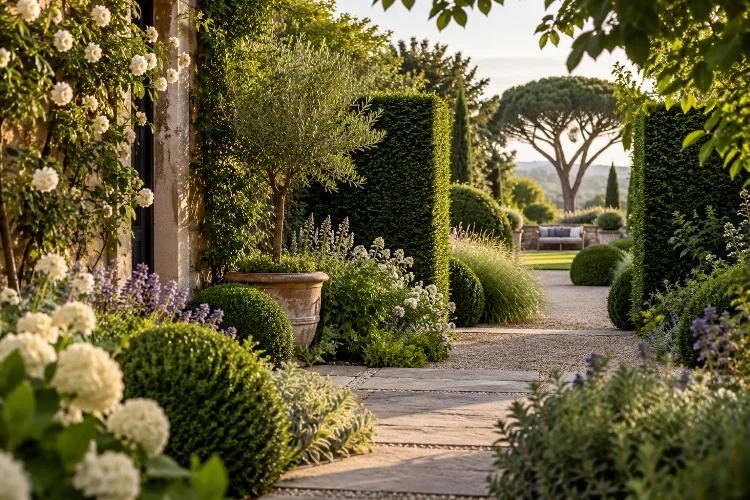
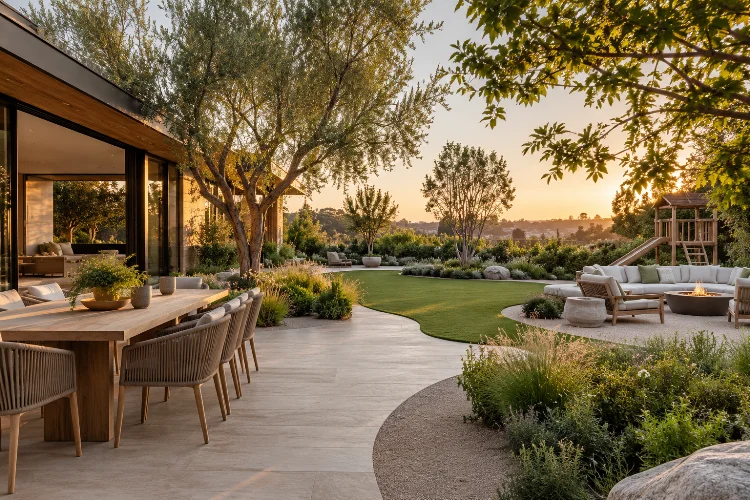
A garden often needs to do several jobs at once. One corner might host family dinners, another needs space for children, while somewhere else you want a quiet chair, vegetable beds, or an outdoor kitchen.
The obvious solution is to divide everything into zones.
But there is a catch. Too many screens, paving changes, fences, raised beds, and unrelated planting styles can make even a generous garden feel like several small gardens awkwardly pushed together.
Creating functional garden zones without fragmenting the landscape is about finding the middle ground. Each area should have a recognizable purpose, but the entire garden should still read as one connected composition.
Landscape designers achieve this through circulation, repeated materials, planting rhythm, partial boundaries, sightlines, and gradual transitions rather than relying only on solid barriers.
A recent Houzz project, for example, used raised planting beds to define different outdoor rooms while preserving openness and movement between them.
The goal is simple: give every part of the garden a purpose without losing the bigger picture.
Start With Activities Before Drawing Boundaries
Do not begin by deciding where hedges or screens should go.
Start by listing what actually needs to happen outdoors.
A typical residential garden might require dining, cooking, children’s play, relaxation, gardening, entertaining, storage, and circulation between the house and other parts of the property.
Next, think about which activities naturally belong together.
An outdoor kitchen should normally sit near dining. A children’s play area may work better where it remains visible from the house. A reading corner can tolerate greater distance because privacy may be more important than convenience.
This prevents random zoning.
One Houzz case study transformed a compact 430-square-foot yard into areas for grilling, dining, and lounging while keeping movement between three separate entrances practical.
The zones worked because their relationships and circulation were planned together rather than treated as independent rooms.
Start with household behavior, then allow the landscape design to respond.
Use Partial Boundaries Instead of Solid Divisions
A zone needs an edge, but that edge does not always need to become a wall.
Low hedges, ornamental grasses, raised beds, open screens, level changes, pergolas, and carefully positioned shrubs can suggest seperation while allowing the eye to continue beyond them.
Outdoor room dividers can also guide movement and selectively edit views. Houzz highlights screens, hedges, walls, and elevation changes as tools that can distinguish garden areas while creating curiosity about spaces beyond.
Transparency is useful.
A slatted timber screen, for example, creates privacy without completely blocking light or views. A waist-high hedge can organize the ground plane while leaving distant planting visible.
Reserve solid barriers for situations where they solve a genuine problem, such as screening utilities, creating privacy from neighbors, or controlling access.
The softer the boundary, the easier it usually is to preserve a sense of overall space.
Let One Circulation System Connect Everything
Paths are not simply transportation between zones.
They are what turn multiple outdoor rooms into one journey.
Develop a clear hierarchy. Primary paths should connect important destinations such as the house, dining terrace, garage, main lawn, and garden entrance. Secondary paths can lead toward quieter features, planting areas, or informal seating.
Avoid giving every zone a completely independent path system.
Instead, allow one major route to connect several spaces so the garden feels like a sequence rather than a collection of isolated destinations.
Curved routes can slow movement and reveal spaces gradually, while straight axes provide stronger visual direction. The best choice depends on the architecture and character of the landscape.
Keep circluation intuitive.
Someone carrying dinner outside should not need to navigate a decorative maze before reaching the table. More scenic routes can be reserved for parts of the garden where wandering is part of the experience.
Repeat Materials to Create Visual Continuity
Different zones can have different personalities without using entirely different materials.
Repetition is one of the easiest ways to hold a landscape together.
If natural stone appears beside the house, repeat it as stepping stones farther into the garden. Timber used for a pergola might appear again in a bench or screen.
The same principle works with paving.
A dining terrace and lounge area can use different paving patterns while keeping the same basic material or color family. One landscape featured by Houzz used variations in paver patterns to distinguish dining and lounging areas while maintaining continuity across the overall patio.
Think of this like interior design.
An open-plan house might use different rugs to identify living and dining areas, but repeated colors and finishes keep them visually connected.
Outdoor zoning can work exactly the same way.
Variation creates identity. Repetition creates continunity.
Use Planting as the Unifying Layer
Hard landscaping may establish the zones, but planting can make them feel like one garden.
Choose a core planting language and repeat it throughout the property.
That does not mean planting the same flower everywhere. Instead, repeat selected structural plants, foliage colors, grasses, small trees, or forms.
The RHS emphasizes repetition as an important design principle, noting that repeating plants, colors, or shapes can strengthen a garden and prevent it from appearing haphazard.
For example, three multi-stem trees placed in different zones can create rhythm across a large property. The same ornamental grass might soften both the dining terrace and the edge of a play lawn.
The individual areas can still vary.
A sunny dining zone may contain Mediterranean-style plants while a shaded corner uses woodland species. Repeating a few compatible colors, forms, or materials can keep those different planting communities connected.
Planting should behave like a thread running through the landscape.
Maintain Sightlines Between Different Areas
Visual connection is one of the strongest defenses against fragmentation.
When standing in one zone, try to maintain some indication of another.
You might see a specimen tree beyond a hedge opening, the edge of a pergola through planting, or a bench positioned at the end of a pathway.
This gives the landscape depth.
The RHS recommends using screens and openings so the entire garden is not visible at once, while layered planting creates depth and allows new points of interest to emerge as people move through the space.
Complete visibility is not necessary.
In fact, partially hiding a destination can make the garden feel larger because the viewer senses additional space beyond what is immediately visible.
The key is avoiding accidental dead ends.
Before planting a hedge or installing a screen, check the view from the house, major seating positions, entrances, and neighboring zones.
Sometimes shifting a screen by a small distance preserves a valuable visual relationship.
Create Transitions Instead of Abrupt Changes
Zones often feel fragmented when the transition between them is too sudden.
Imagine moving directly from a polished contemporary terrace into a rustic woodland garden with no intermediate planting or repeated materials. Both areas may look good individually but still feel disconnected.
Create transitional spaces.
A narrow planting bed between two terraces can gradually introduce the species used in the next zone. Paving can shift slowly from large slabs into gravel or stepping stones rather than changing abruptly at one hard line.
Plant heights can transition too.
Low planting around a social terrace might gradually become taller and denser as the landscape approaches a private seating area.
These transitions create a sense of progression.
RHS guidance on rhythm describes repetition and flowing lines as tools that draw the eye and visitor through a garden, helping establish visual movement rather than isolated compositions.
Think about the space between zones as carefully as the zones themselves.
Give Each Zone Different Levels of Enclosure
Not every activity needs the same atmosphere.
Dining might benefit from some shelter and a defined edge. A children’s lawn usually needs openness and visibility. A meditation or reading space can feel more comfortable when surrounded by taller planting.
Adjust enclosure accordingly.
Pergolas provide overhead definition without necessarily creating solid walls. Trees can create a ceiling through their canopy. Hedges or screens can establish partial vertical boundaries.
Houzz examples of outdoor rooms show how dividers, planting, and structures can define areas while still maintaining relationships with surrounding spaces.
This difference in enclosure makes each zone recognizable without relying on completely different design languages.
Think of the garden as a house with some rooms that are open, some partially enclosed, and a few more private.
The boundaries should respond to function.
Avoid Filling Every Available Piece of Ground
Functional zoning does not mean every square metre needs a labeled purpose.
Empty space is useful.
Lawns, simple groundcover, broad planting areas, gravel, and visual gaps allow the eye to rest between more active zones. They also prevent the landscape from feeling overdesigned.
The RHS notes that contemporary gardens often benefit from clear geometry and avoiding excessive clutter, while even abundant cottage-style gardens depend on repeated planting and structural frameworks.
Give major zones enough breathing room.
A dining area does not need another destination immediately beside it simply because empty ground remains.
Negative space can strengthen nearby features and preserve flexibility.
It also gives the garden room to change. A lawn used for children today could become a larger planting area later without dismantling several permanent structures.
That kind of flexibility reduces long-term maintanance and makes the landscape easier to adapt.
Test the Whole Garden, Not Just Individual Zones
Before construction begins, evaluate the landscape from multiple positions.
Stand inside the house and look through major windows. Walk the proposed route from the kitchen to the dining terrace. Imagine guests moving between the lounge, lawn, and garden entrance.
Check each area independently, then look at the garden as a whole.
Ask whether materials repeat naturally, pathways feel connected, and important views remain visible.
A Surrey garden featured by Houzz had previously developed piecemeal and lacked unity. The redesign reconnected spaces through revised planting, clearer views, focal points, and repeated plants around different areas.
That is the central lesson.
Strong garden zoning is not simply about creating good individual spaces. It is about creating relationships between them.
Creating functional garden zones without fragmenting the landscape requires more than dividing outdoor space according to activity.
Successful gardens combine clear functions with connected circulation, repeated materials, consistent planting, layered sightlines, gradual transitions, and carefully controlled enclosure.
Each outdoor room gains its own character while still belonging to the wider landscape.
Begin with real household activities, then establish only the boundaries those activities genuinely need. Keep visual and physical connections wherever possible, and use repetition to carry the same design language through different areas.
Before adding another screen, hedge, path, or patio, ask whether it strengthens both the individual zone and the garden as a whole. The best zoning makes outdoor spaces more useful without making the landscape feel smaller.