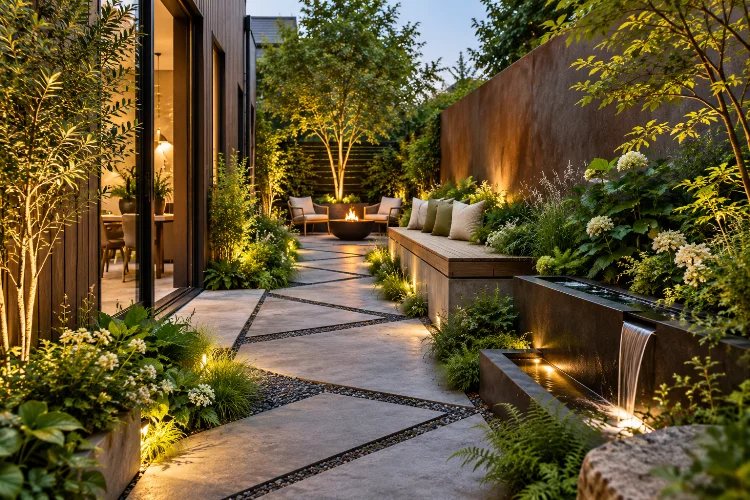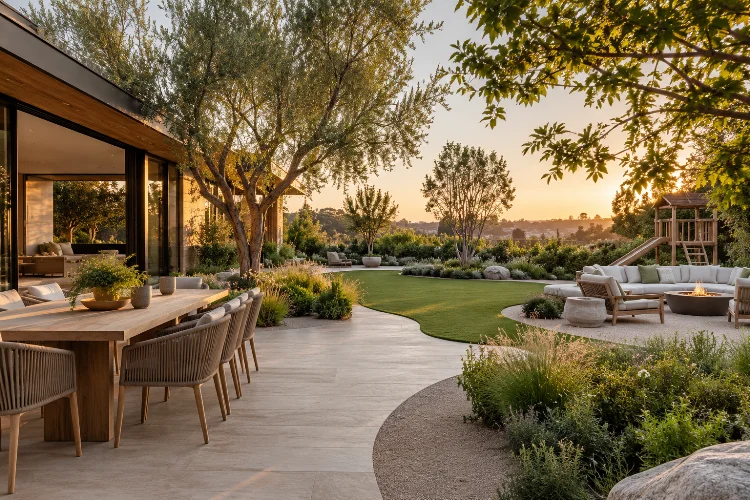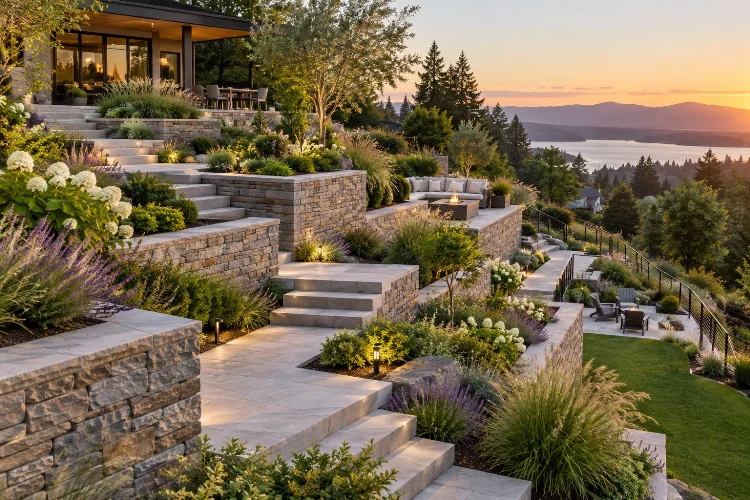
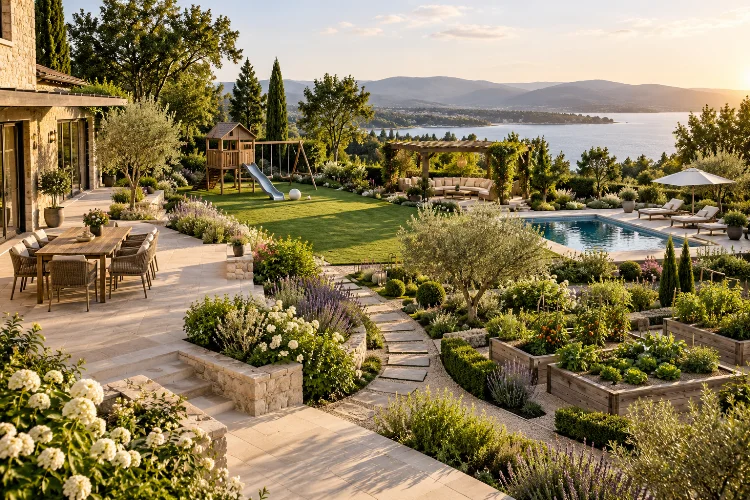
A large residential garden can offer much more than a lawn surrounded by planting beds. With enough space, one property might include a dining terrace, children’s play area, vegetable garden, quiet retreat, entertaining zone, pool, wildlife habitat, and practical service area.
The challenge is making all those spaces feel like one garden rather than several unrelated projects. That is where advanced landscape planning for multi-zone residential gardens becomes valuable.
Instead of deciding where individual plants or pieces of furniture should go first, you start by understanding the entire site: sunlight, drainage, soil, views, circulation, privacy, household routines, and long-term maintenance.
The Royal Horticultural Society recommends creating a detailed garden plan before major changes because accurate mapping helps designers understand dimensions, existing features, sunlight, and material requirements before expensive work begins.
Good multi-zone planning creates variety without chaos. Each zone can perform a different job while pathways, planting, materials, and sightlines connect everything into one coherent landscape.
Map the Property Before Creating Individual Zones
Start with the site itself, not inspiration photos.
Measure property boundaries, buildings, doors, windows, existing trees, utilities, terraces, slopes, drainage areas, and anything else that will remain. Then record where morning and afternoon sun reach the garden.
A proper site analysis should also consider water movement, soil conditions, prevailing wind, existing vegetation, and microclimates.
University of Georgia Extension notes that poor growing conditions cannot simply be corrected through attractive design, making site research an important first step.
This process often reveals opportunities that were not obvious before.
A shaded corner might be ideal for a quiet seating area rather than a struggling lawn. A sunny section near the kitchen could support vegetables and herbs. An exposed boundary may need trees or shrubs before it becomes comfortable enough for dining.
Think of this map as the operating system for the garden. Every major decision should respond to it.
Define Zones Around Real Household Activities
Next, decide what the household actually wants to do outdoors.
Avoid vague categories such as “garden area.” Give each space a clear purpose.
You might create an outdoor dining terrace near the kitchen, a flexible lawn for children, a secluded reading corner, a productive garden, and a secondary social area around a fire feature.
Prioritize frequently used activities.
If the family eats outside several evenings each week, dining deserves convenient access to the kitchen and enough room for chairs to move comfortably. A fire pit used six times a year can sit farther away.
ASLA describes thoughtful residential landscape design as a combination of everyday comfort, environmental performance, water management, biodiversity, and connection with nature.
Not every square metre needs a dedicated activity either. Transitional planting between zones can make a garden feel calmer and less over-designed.
The result should feel like a series of outdoor rooms with different personalities rather than a collection of features squeezed into every available corner.
Use Circulation to Connect the Garden
Paths are one of the most important elements in a multi-zone landscape.
They determine how people discover the garden and how separate areas relate to each other.
Primary routes should connect destinations people use constantly, such as the house, parking area, dining terrace, garden gate, and main lawn. Secondary pathways can be slower and more exploratory, perhaps leading toward a bench, planting garden, or hidden seating area.
The RHS wellbeing garden guidance recommends pathways that link garden areas clearly while supporting navigation, exploration, and different viewpoints. Curving paths can also reveal spaces gradually rather than showing the entire garden immediately.
Avoid unnecessarily complicated circluation.
A person carrying food from the kitchen should not need to follow a scenic tour before reaching the dining table. Functional routes should usually be direct, while leisure paths can be more playful.
Width matters too. Paths need enough space for their intended users, maintenance equipment, and potential future accessibility requirements.
Design Around Microclimates Instead of Fighting Them
Even within one residential property, growing conditions can change dramatically.
A south-facing wall may become hot and dry, while a shaded corner remains cool and damp. Buildings can create wind tunnels, and mature trees can produce entirely different soil and light conditions underneath their canopies.
These are microclimates.
UGA Extension recommends documenting sunlight, drainage, wind, temperature differences, and other local site conditions before selecting plants. Matching plants to those conditions generally improves performance and can reduce unnecessary watering.
Use these variations deliberately.
Heat-loving plants can occupy sunny areas. Shade-tolerant planting can turn darker boundaries into attractive woodland-style zones. A low area that naturally receives water may support moisture-loving vegetation or a rain-garden concept.
Trying to force identical planting conditions across the entire property usually increases maintanance.
A more resilient landscape works with the site’s natural differences rather than constantly correcting them.
Create Privacy Without Building Hard Barriers Everywhere
Different zones need different degrees of privacy.
An outdoor dining area might require screening from a neighboring property, while a children’s play zone needs visibility from the house. A quiet retreat may feel better when it is partially hidden behind planting.
Use layers rather than automatically installing solid fences.
Small trees, hedges, ornamental grasses, pergolas, trellises, shrubs, and vertical planting can define outdoor rooms while maintaining airflow and a sense of connection.
Sightlines are just as important.
Standing at the main windows or doors, consider what you want to see. A specimen tree, sculpture, flowering border, or distant seating area can become a visual destination.
Avoid placing tall screens randomly throughout the garden. Too many barriers can make a large property feel unexpectedly small and seperate.
The most effective zoning often creates partial enclosure. You understand where one space ends, but you can still sense another area beyond it.
Plan Irrigation Around Hydrozones
Watering an entire property as though every plant has the same requirements is inefficient.
Instead, organize irrigation around hydrozones: groups of plants with similar water needs.
The U.S. EPA recommends grouping similar plants into irrigation zones while also considering sun exposure, shade, sprinkler type, and plant characteristics.
A lawn might require a different system from established shrubs. Vegetable beds may need regular watering, while drought-tolerant planting could require much less once established.
Microirrigation can be especially useful for garden beds, trees, and shrubs because it applies water slowly near the root zone.
EPA WaterSense says this approach can use 20-50% less water than conventional sprinkler systems in suitable applications while reducing evaporation and runoff.
Smart irrigation controllers can improve the system further by responding to weather or soil moisture rather than following the same fixed schedule regardless of conditions.
Planning irrigation zones while designing the landscape is much easier than trying to retrofit an inefficient system afterward.
Balance Hardscape and Planting
Patios, retaining walls, paths, outdoor kitchens, pools, and structures give a large garden functionality, but hardscape can quickly dominate.
Planting provides the softness and continuity that connects separate functional spaces.
Repeat certain plants, materials, shapes, or colors throughout the property. For example, the same ornamental grass might appear beside the dining terrace and again near the pool.
This repetition creates visual rhythm without making every area identical.
The EPA recommends considering intended landscape use, soil, site conditions, appropriate plants, and long-term maintenance together when developing water-smart residential landscapes.
Trees are especially valuable because they operate vertically.
They can provide shade above dining areas, frame views, screen neighboring buildings, and help larger gardens feel established. Lower shrubs, perennials, grasses, and groundcovers then create additional layers underneath.
Do not focus only on summer.
Mix evergreen structure with seasonal flowers, foliage changes, bark, seed heads, and other features so different zones remain interesting throughout the year.
Design Maintenance Into the Landscape
A beautiful garden can become exhausting if every zone requires constant attention.
Consider maintenance during the design stage.
Place vegetable beds where they are easy to reach with tools and water. Make lawn shapes straightforward enough to mow efficiently. Avoid tiny strips of grass trapped between hard surfaces.
Think about access for pruning, waste removal, repairs, and irrigation maintenance.
The EPA recommends supporting healthy soil, using appropriate plants, maintaining irrigation systems, mulching, and adapting watering to seasonal conditions as part of efficient landscape care.
Plant density also matters.
A border designed around mature plant sizes may initially look less full, but it can become easier to maintain than one packed with plants that later compete for space.
And allow the garden to evolve.
A children’s play zone might eventually become a larger entertaining area or planting garden. A lawn may shrink as trees mature.
Good landscape planning provides enough flexiblity for those changes without rebuilding the entire property.
Advanced landscape planning for multi-zone residential gardens is really about creating relationships between spaces.
Successful gardens combine clear activity zones with logical pathways, site-appropriate planting, thoughtful privacy, efficient irrigation, strong visual connections, and realistic maintenance requirements.
Each zone can feel different while still contributing to one larger landscape.
Start with observation rather than decoration. Map sunlight, drainage, views, soil conditions, household movement, and existing vegetation before deciding where individual features belong.
Then develop the garden gradually, prioritizing infrastructure and major circulation before detailed planting.
When every zone has a purpose and every transition feels intentional, even a complex residential garden can feel relaxed, natural, and easy to navigate.